- 22 octobre 2025
- Envoyé par : Godwin TADOUDJE
- Catégorie : International, YECJS Project
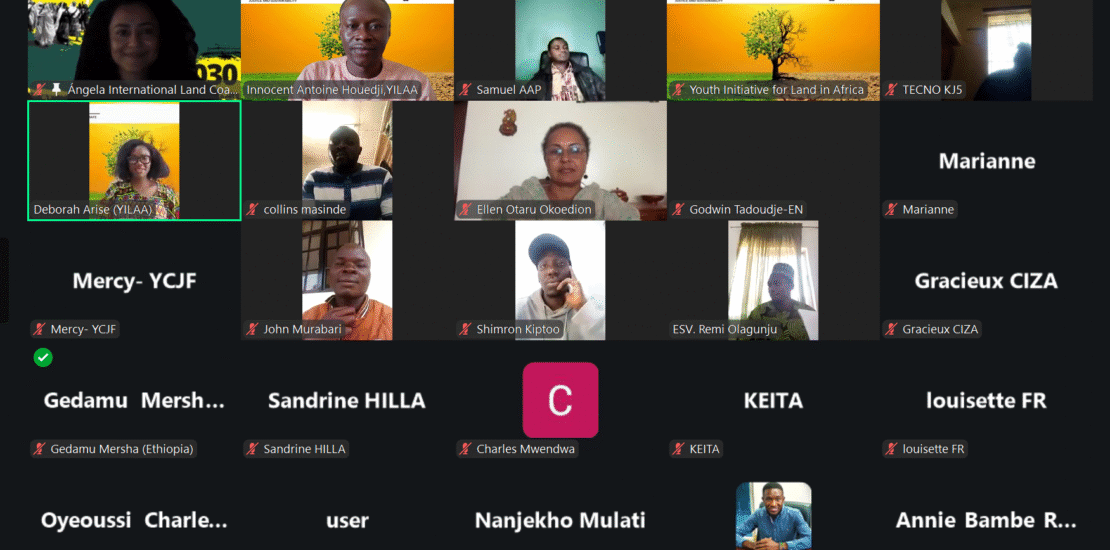
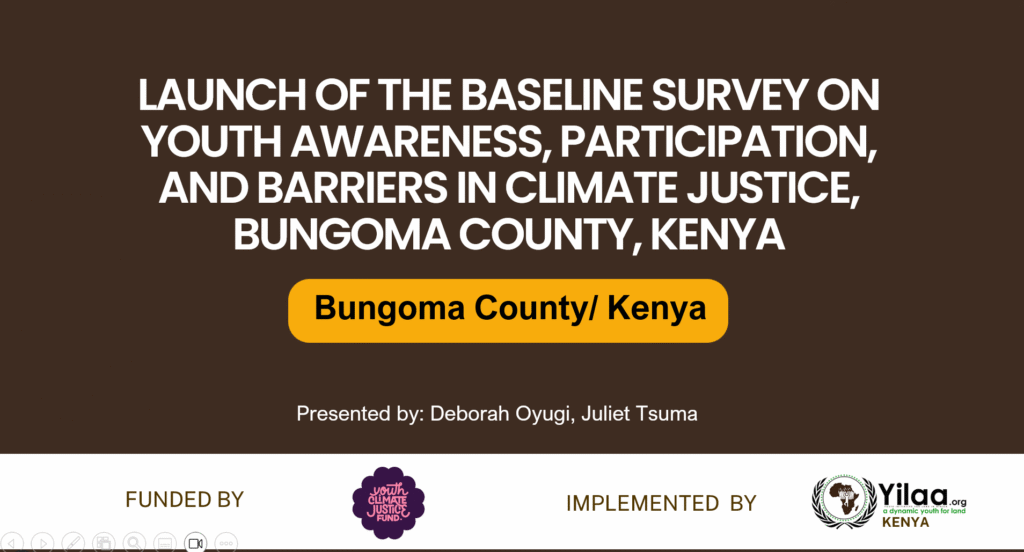
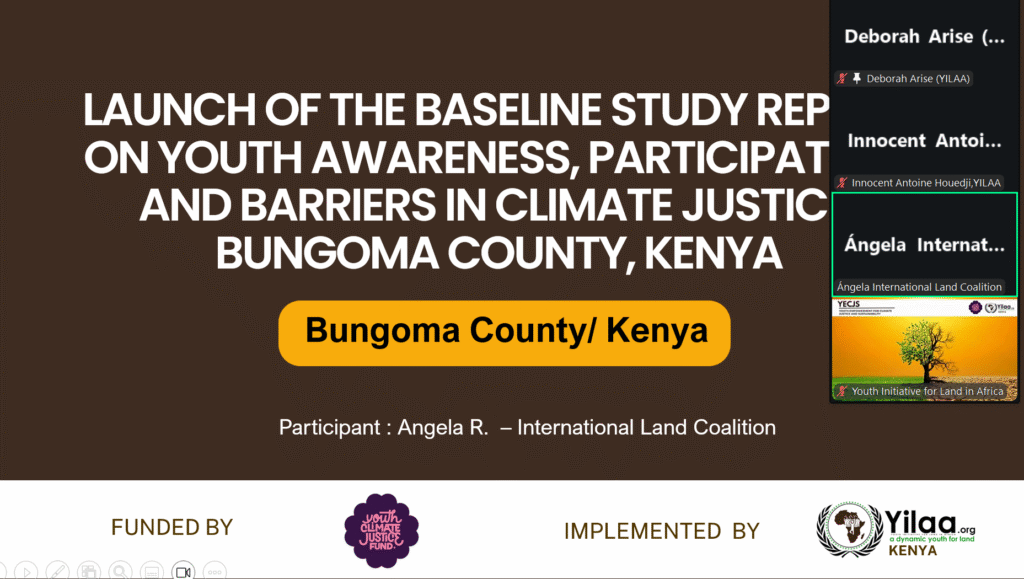
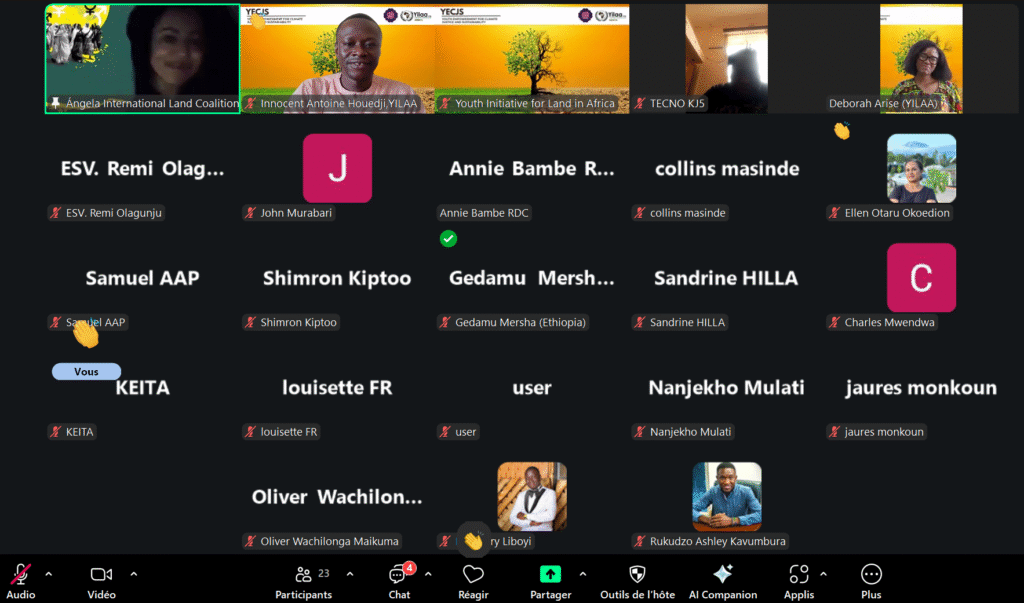
The Youth Initiative for Land in Africa (YILAA), with support from the Youth Climate Justice Fund and the Rockefeller Foundation, has officially launched the findings of its Baseline Survey on Youth Awareness, Participation, and Barriers in Climate Justice in Bungoma County, Kenya.
The survey, conducted across Webuye East, Mount Elgon, and Cheptais sub-counties, reached over 1,100 youth respondents, complemented by key informant interviews and a review of existing youth-led initiatives.
This baseline serves as a foundational step to better understand how young people perceive and engage in climate justice and environmental governance at the community level.
Here is the Summary of Key Interventions from the Launch of the Baseline Assessment Report on Youth Awareness, Participation, and Barriers in Climate Justice.
1. Intervention by Nanjokho Mulati
Topic: Rapid community deforestation and its link to climate change
Nanjokho highlighted the rapid deforestation taking place in parts of Bungoma due to agricultural expansion and wood harvesting.
She explained that this problem stems from land tenure conflicts the area was initially designated as a forest reserve but later degazetted after community protests. The lack of secure land ownership has led to unsustainable exploitation of natural resources.
Key drivers of deforestation identified include:
- High demand for timber, charcoal, and building materials;
- Population pressure and dependence on subsistence farming;
- Limited local awareness of the causes and impacts of climate change.
She further noted the consequences:
- Depletion of water sources and destruction of catchment areas;
- Soil erosion on cleared hillsides;
- Declining agricultural yields, creating a vicious cycle of deforestation and poverty.
Recommendation: Introduce context-based climate education programs that connect deforestation directly to the lived experiences of local communities.
2. Intervention by Juliet – Presentation of the YECJS Project
Topic: Training, financial inclusion, and local climate governance
Juliet presented the main pillars of the Youth Empowerment for Climate Justice and Sustainability (YECJS) project:
- Community training on kitchen gardening, organic weed control, and agroforestry;
- Formation of Village Saving and Loan Associations (VSLAs) to enhance financial inclusion;
- Development of livelihood and life skills, including hairdressing, roofing, and small business innovation, to diversify youth and women’s income;
- Regional leadership and climate advocacy workshops, including online learning sessions;
- Enhanced youth participation in county climate governance through joint meetings with local authorities.
Expected results:
- Establishment of 10 active VSLA groups;
- 300 households adopting sustainable livelihood practices;
- Recognition of youth as key actors in county climate planning;
- Positioning Bungoma as a youth-led climate action hub.
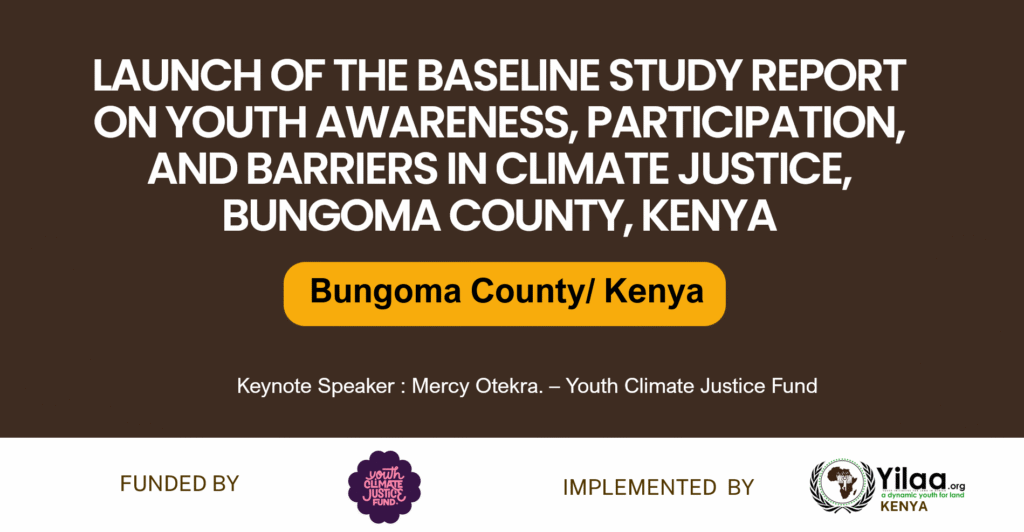
3. Intervention by Mercy Oketra (Youth Climate Justice Fund)
Topic: Inclusion, accountability, and youth empowerment in climate justice
Mercy commended YILAA for conducting a timely and relevant study, emphasizing that the baseline report is a powerful evidence and advocacy tool.
She reminded participants that climate justice rests on three pillars:
- Access to information, resources, and opportunities;
- Agency the ability of young people to act and lead;
- Accountability holding institutions and policymakers responsible.
Mercy highlighted how YILAA’s findings expose the systemic barriers preventing youth from fully engaging in climate and land governance.
She also drew a strong link between land rights and climate justice, noting that “land determines who suffers from floods or droughts and who benefits from adaptation funds.”
She praised YILAA’s community-driven and evidence-based approach and urged the establishment of inclusive governance frameworks where decisions are made with youth, not for youth.
Mercy concluded by calling for flexible funding mechanisms and greater recognition of local youth leadership as a driver of climate transformation.
4. Intervention by Angela (International Land Coalition – ILC)
Topic: Youth, land rights, and democratic participation