
- 18 juillet 2025
- Envoyé par : Godwin TADOUDJE
- Catégorie : BLOG, International, Publications, Youth Climate Action
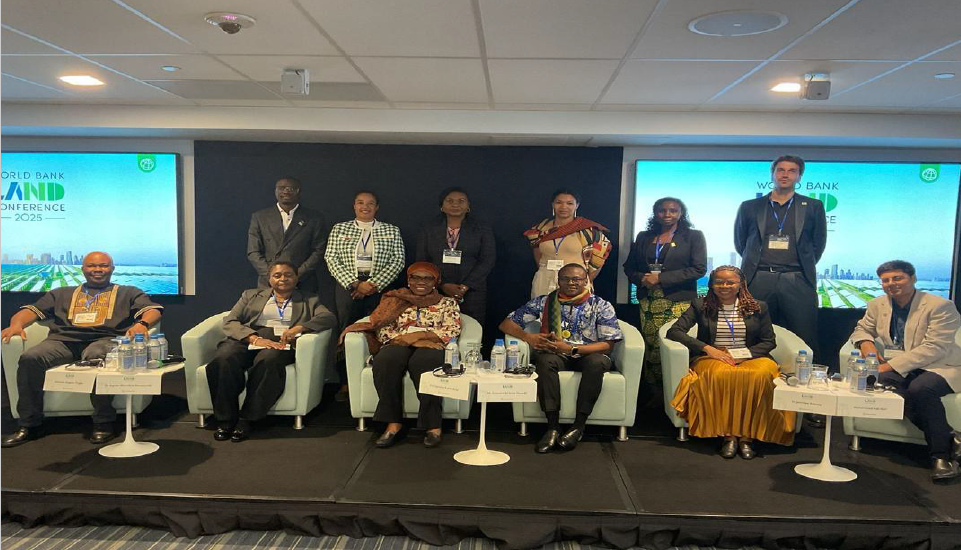
NELGA Highlights Land-Based Climate Action in Africa at the 2025 World Bank Conference
At the 2025 World Bank Land Conference in Washington, D.C., the Network of Excellence on Land Governance in Africa (NELGA) hosted a special session under the theme “Securing Land for Climate Action in Africa: Ideas, Concepts and Experiences.” The session highlighted the central role of land tenure security in building climate resilience across the African continent.
The session brought together researchers, policymakers, youth leaders, and development partners from eight key institutions, including YILAA, FIG, GLTN, GIZ, LSE, and several African universities. Together, they explored how inclusive and structured land policies can serve as levers for effective and sustainable climate action.
Context and Objectives
Africa is disproportionately affected by climate change, facing intensifying droughts, floods, and land degradation. These environmental shifts directly impact food security, infrastructure, and livelihoods. Within this context, land governance has emerged as a powerful lever for enabling sustainable climate responses. The African Union (AU), through the African Land Policy Centre (ALPC), has promoted regional strategies like the Climate Change and Resilient Development Strategy and Action Plan (2022–2032), which emphasize land’s role in building climate-resilient communities.
NELGA’s session aimed to:
- Promote a continental framework for climate-responsive land governance.
- Enhance cooperation among African institutions and countries.
- Showcase practical experiences and policy solutions rooted in African contexts.
Key Themes and Messages
The session conveyed a central message: land tenure security is critical for climate mitigation and adaptation. Insecure land rights can undermine adaptation efforts and exacerbate vulnerability, while secure, inclusive systems strengthen resilience and environmental sustainability.
Core points included:
- The land tenure–climate nexus must be integrated into national and continental climate strategies.
- Land policies should reflect equity, gender responsiveness, and community participation.
- African experiences already demonstrate effective, scalable climate solutions rooted in land governance.
Session Highlights
The 90-minute session featured diverse voices from academia, civil society, government, and international organizations. Institutions represented included YILAA, GIZ, GLTN, the London School of Economics, the University of East London, and Namibia University of Science and Technology (NUST).
Key presentations included:
- Dr. Agnes Mwasumbi (NELGA East Africa) highlighted Tanzania’s NDC 3.0, which integrates land governance to combat climate change. She stressed that land governance is essential for reducing emissions and economic losses linked to climate risks.
- Prof. Rudith King (NELGA West Africa – Anglophone) shared a case from Kumasi, Ghana, on how women adapt to urban flooding. She called for gender-sensitive policies that reflect lived realities of vulnerable populations.
- Mr. Innocent Houedji (CEO of YILAA) championed youth-led climate actions. From advocacy to digital innovation, young Africans are driving change. He urged policymakers to move beyond tokenism and recognize youth as current leaders.
- Dr. Jennilee Kohima (FIG Commission 8.1) discussed tenure insecurity in informal Namibian settlements, linking informality to increased climate risk and calling for inclusive urban planning.
- Mr. Adil Sait (LSE/GLTN) reflected on NELGA’s alignment with global land agendas, emphasizing the importance of African-led knowledge production.
Engagement and Outcomes
A dynamic roundtable allowed participants to share field experiences, debate policy ideas, and build connections. Topics included integrating traditional land tenure systems into formal governance, and enhancing academic contributions to climate-related policymaking. Attendees applauded NELGA’s decade-long role in capacity building, training, and research across the continent.
High-level remarks were delivered by Dr. Joan Kagwanja (ALPC) and Dr. Janet Edeme (AU Commission), both commending NELGA’s strategic impact and inviting stakeholders to continue collaborating. Dr. Gaynor Paradza (PARI) emphasized sustainability and long-term support for NELGA’s work in Southern Africa.
Closing Reflections and Way Forward
Dr. Diane Dumashie, President of FIG, closed the session by stressing the “Power of Network Partnerships”—connectivity, collaboration, capacity, and coordination. She called for greater courage and unity in addressing complex global land and climate challenges, reaffirming FIG’s commitment to working with NELGA and African institutions.
The session concluded with a clear message: NELGA has emerged as a global actor in land governance and climate policy. Backed by partners like GIZ and the SLGA programme, the network is actively shaping Africa’s path toward responsible, inclusive, and climate-resilient land systems.
As climate challenges intensify, NELGA’s work—alongside youth leaders like YILAA and institutional partners—continues to drive locally informed, globally relevant solutions that empower African communities and secure the land for future generations.
Find attached the Repport document from the conference.